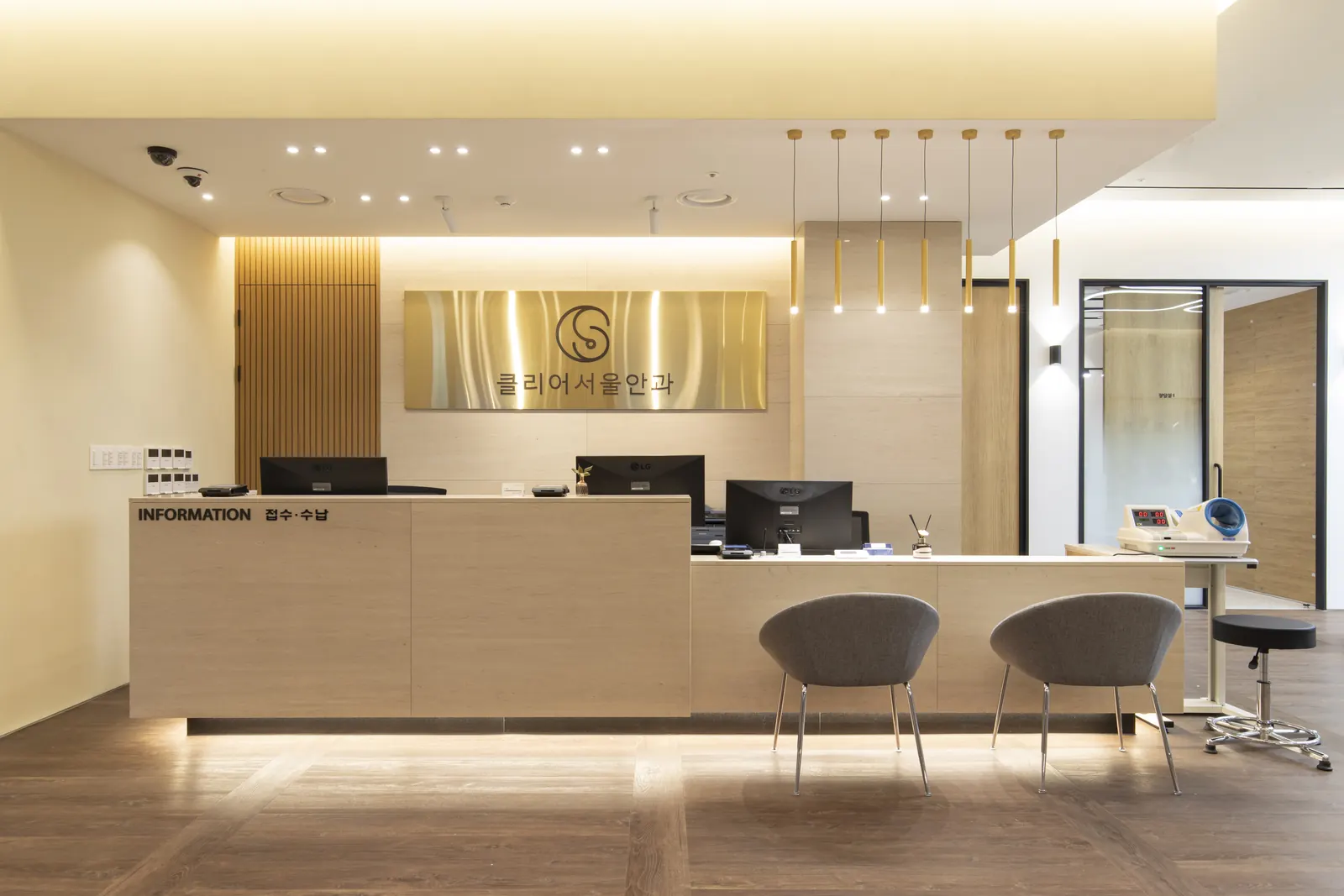

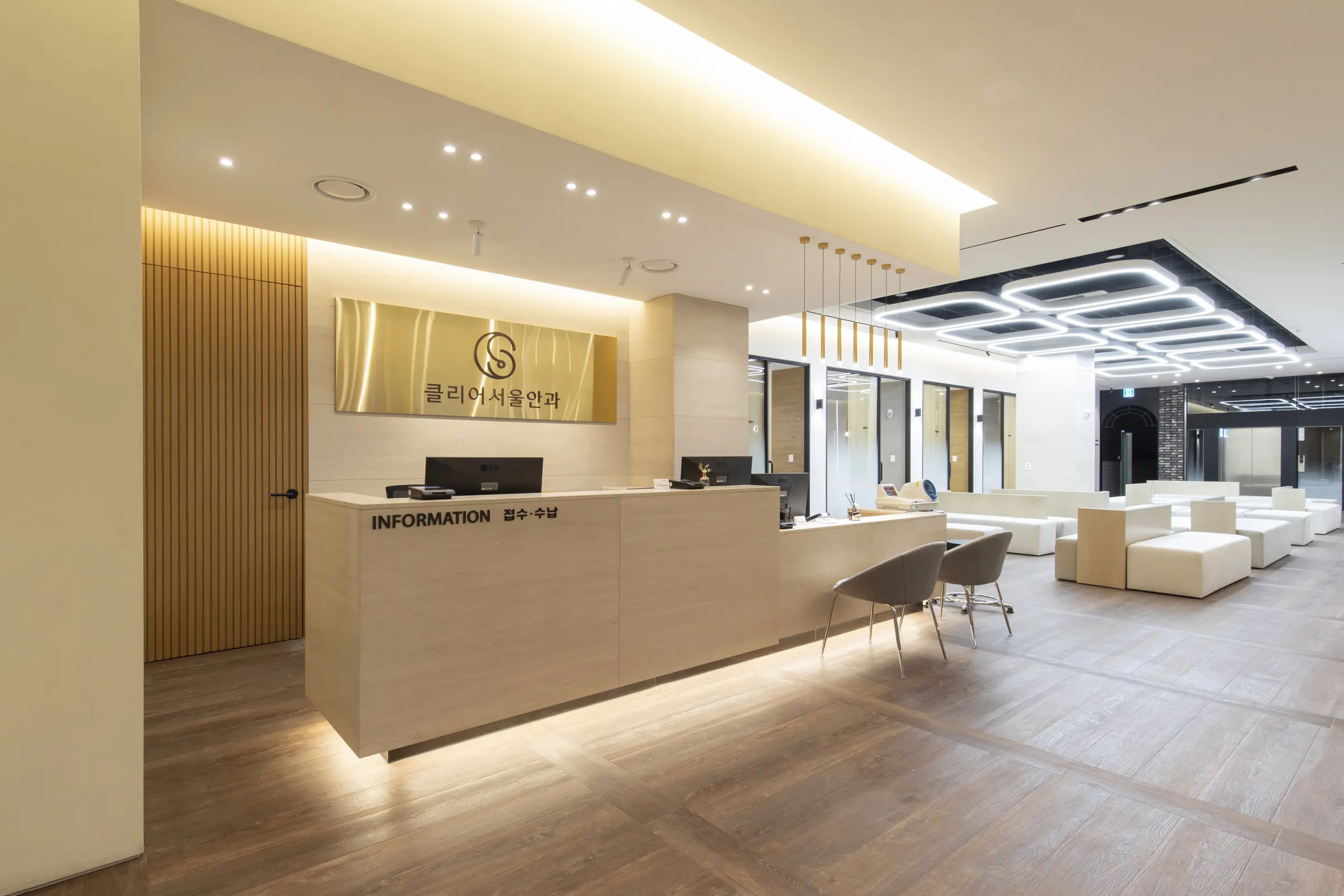

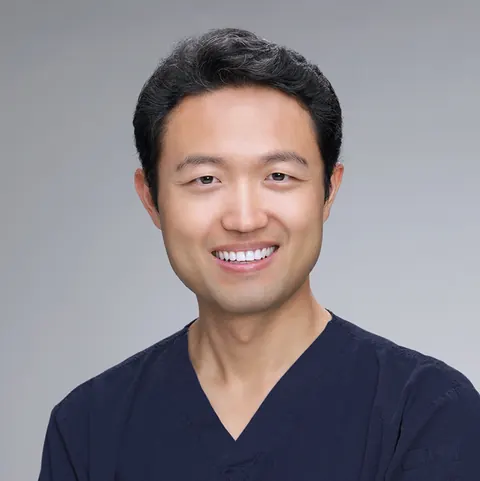

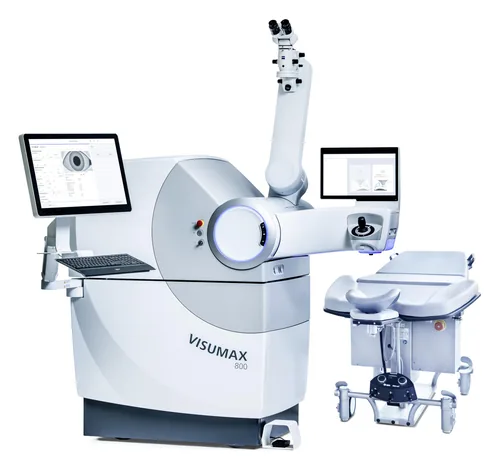
For SMILE pro eye surgery in Seoul, the ZEISS VisuMax 800 shapes a lenticule inside the cornea and the surgeon removes it through a small incision, so no corneal flap is cut. People also call it SMILE pro LASIK, but LASIK is the flap method. At Clear Seoul Eye Clinic, near Gangnam Station Exit 10, the ophthalmologist who reads your scans decides and operates.

Is it for you?
Who is a candidate for SMILE pro?
SMILE pro reshapes the cornea from the inside, so the first question is whether your cornea has the thickness and a regular enough shape to give up a lenticule. The second is whether your prescription has settled. The clinic asks for no change in prescription over the last 6 months, and published SMILE pro studies report outcomes for nearsightedness with and without astigmatism (Cung et al., 2025).
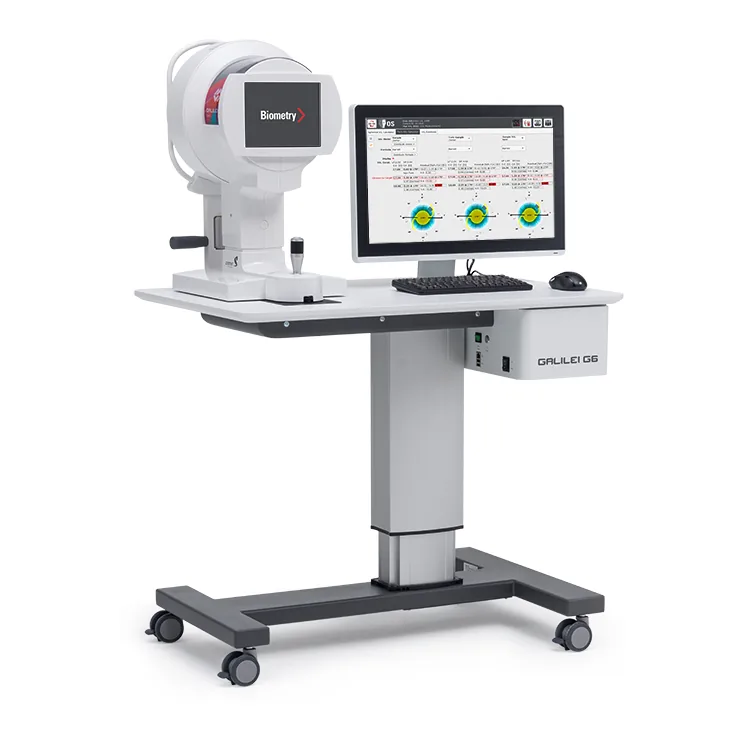
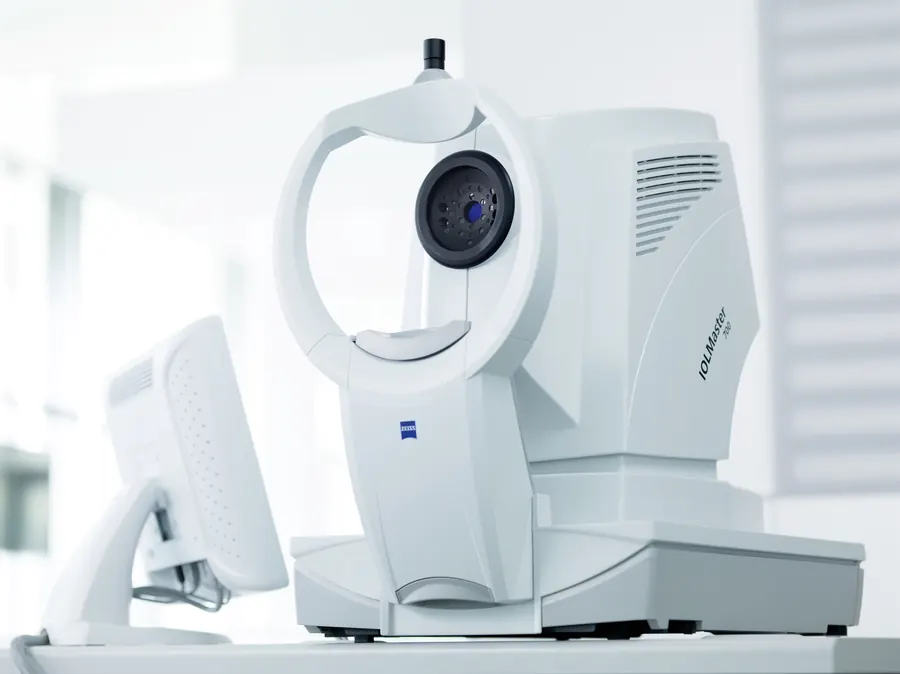
The clinic names two situations where it tends to suggest SMILE pro: stronger astigmatism that needs precise axis alignment, and a job or routine you need to get back to within days. Your eye exam turns those preferences into measurements. Corneal maps from the GALILEI G6, eye measurements from the IOLMaster 700 and a refraction test show the doctor how much tissue the correction would remove. If the numbers leave too little margin, the doctor explains why LASEK or an ICL lens is the safer route, or why surgery should wait.
Usually a good fit
- Nearsightedness, with or without astigmatism, inside the range your scans allow
- A prescription that has not changed over the last 6 months
- Astigmatism that calls for careful axis alignment
- A wish to return to screens and work within a few days
- A week in Seoul for the next-day and one-week checks
We may suggest another method or waiting
- A cornea the scans show as too thin or irregular, including suspected keratoconus
- A prescription that is still shifting from year to year
- Pregnant, breastfeeding or a minor: contact the clinic before booking
- An eye infection, inflammation or untreated dry eye
- Age-related blur when reading up close, which SMILE pro does not treat
Before you decide
Your eye exam decides the method
Corneal thickness, shape and prescription decide whether SMILE pro is offered to you at all. To see what your own measurements allow before you plan the trip, send the consultation form.
What the pre-surgery exam measures
- 1Corneal shape and thicknessDecides whether a flap, a small incision or surface treatment is safe for your cornea. · GALILEI G6 · Ziemer
- 2Eye length and optical measurementsUsed with the other scans to plan the correction. · IOLMaster 700 · ZEISS
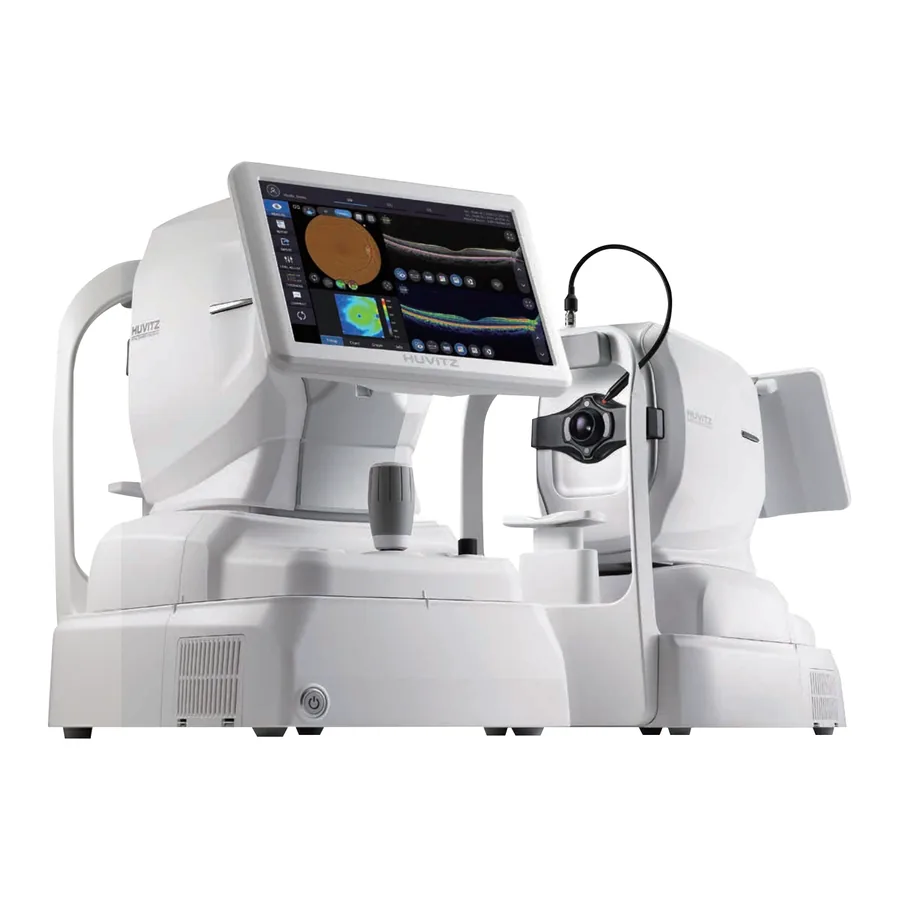
- 3Retina and optic nerveChecks the back of the eye before any surgery. · HOCT · Huvitz
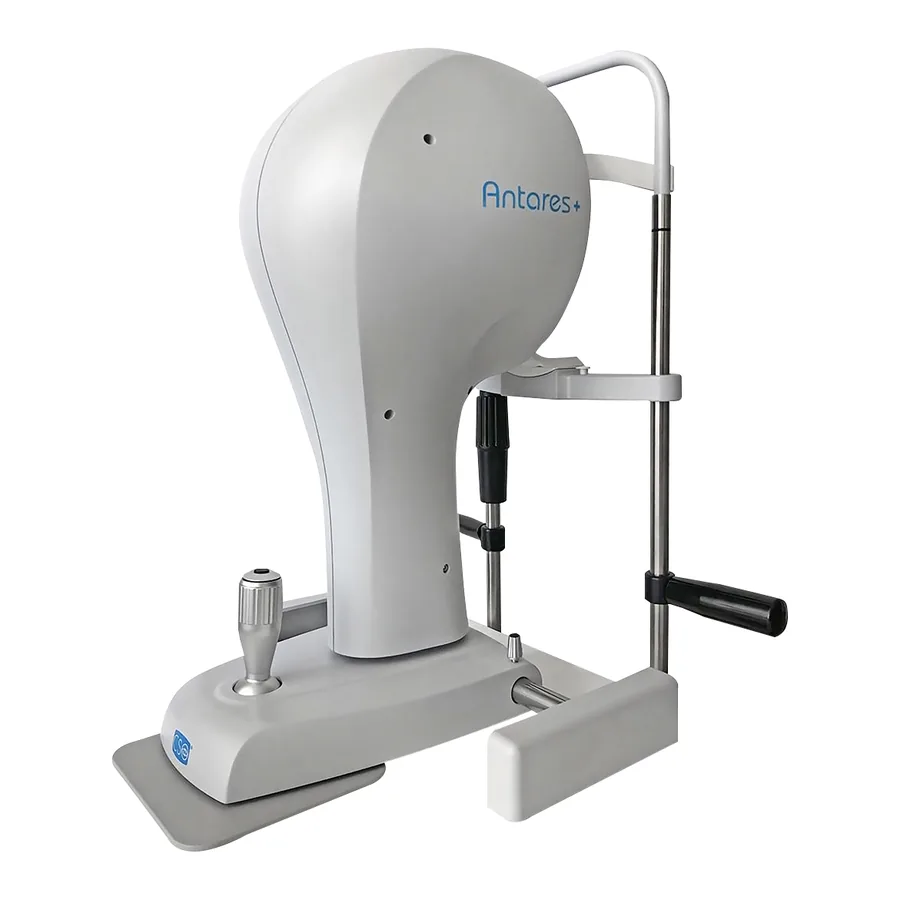
- 4Tear film and dry eyeDry eye found before surgery is treated or factored into the choice. · Antares · CSO
How it works
How the VisuMax 800 removes the lenticule
The VisuMax 800 is a femtosecond laser: it places very short pulses at a set depth inside the cornea. In SMILE pro those pulses outline a lens-shaped lenticule and a small entry cut on the side of the cornea, which the clinic describes as about 2 mm. The surgeon then separates the lenticule and draws it out through that opening. Removing the tissue changes the curve of the cornea, and that change corrects the nearsightedness and astigmatism measured at your exam. The front layers of the cornea stay in place because nothing is folded back.
SMILE pro is the same lenticule method as SMILE, performed on a newer ZEISS platform. Kim and colleagues (2025) recorded an average lenticule-creation time of about 10 seconds on the VisuMax 800 against about 28 seconds on the VisuMax 500, with the same vision and residual prescription at three months. A 2026 meta-analysis found no statistical difference in visual results between the two machines and a more accurate correction of astigmatism with the 800 (Li, 2026). The VisuMax 800 also aligns the astigmatism axis automatically, a feature ZEISS calls OcuLign, to allow for the small rotation of the eye when you lie down. A shorter laser phase means less time with the eye held still under suction.
Contact lenses out
Before the examPer the clinic's guidance, soft lenses come out about 5 days to 1 week ahead, hard lenses about 2 to 3 weeks and orthokeratology lenses about 4 weeks; the exact period is given when you book.
Scans and doctor review
About 2 hours (clinic guidance)Corneal maps, eye measurements and refraction come first, and then the ophthalmologist goes through the numbers with you and sets the plan.
Numbing drops and docking
Drops numb the surface of the eye, a curved contact glass holds it steady with light suction, and you look at a small fixation light.
Laser and lenticule removal
About 10 to 15 minutes in surgery (clinic guidance)The laser shapes the lenticule with the astigmatism axis aligned, and the surgeon removes it through the side opening, one eye after the other.
Rest, drops and next-day check
Day 1You rest briefly, receive your eye drops and come back the following morning so the doctor can check the cornea.
| Criteria | SMILE pro | SMILE | LASIK | LASEK |
|---|---|---|---|---|
| How the cornea is reshaped | Lenticule removed via small incision | Lenticule removed via small incision | Flap lifted, excimer laser beneath | Surface layer removed, laser on top |
| Laser platform | ZEISS VisuMax 800 | ZEISS VisuMax 500 | Femtosecond flap and excimer laser | WaveLight EX500 |
| Corneal flap | None | None | Yes | None |
| Astigmatism axis | Automatic alignment (OcuLign) | Manual marking before surgery | Set in the laser plan | Set in the laser plan |
| Early checks in Seoul | Next day and 1 week | Next day and 1 week | Next day and 1 week | Protective lens out on about day 5 |
| Price | from ₩4,000,000 ≈ US$2,990 for both eyes | from ₩2,500,000 ≈ US$1,870 for both eyes | from ₩1,790,000 ≈ US$1,340 for both eyes | from ₩990,000 ≈ US$740 for both eyes |
Your scan results decide which column applies; each method has its own corneal thickness and prescription limits.


Your ophthalmologists
Three ophthalmologists, from exam to follow-up
“The ophthalmologist who reads your scans is the one who operates.”

Dr. Taehyung Lim
Head Director · Ophthalmologist
- Internship at Asan Medical Center, Seoul
- Cornea and cataract fellowship, Seoul National University Hospital
- Former professor, Catholic Kwandong University College of Medicine

Dr. Jaehyung Kim
Head Director · Ophthalmologist
- Ophthalmology residency and cornea clinical fellowship, Asan Medical Center
- Former professor of ophthalmology (cornea), Chungbuk National University Hospital
- Research training at Flaum Eye Institute, University of Rochester, and SickKids, University of Toronto

Dr. Jayoung Lee
Head Director · Ophthalmologist
- Graduate training in cornea and external eye disease, Soonchunhyang University
- Cornea and cataract fellowship, Seoul National University Hospital
- Former head of ophthalmology and professor, Soonchunhyang University Hospital
At a glance
SMILE pro facts for planning your trip
| Surgery time | About 10 to 15 minutes in surgery, per the clinic's guidance |
|---|---|
| Numbing | Numbing eye drops, per the clinic |
| Same-day surgery | Possible after the roughly 2-hour exam (about 3 hours in all) if your results allow it, per the clinic |
| Vision recovery | Early haze settles in about 1 to 2 days per the clinic; recovery varies by person |
| Follow-up visits | Next day, 1 week, then 1, 3 and 6 months, per the clinic's schedule |
| How long to stay | The clinic recommends surgery at least about a week before your flight home |
| Flying home | No fixed flight day; generally your ophthalmologist decides at the next-day or 1-week check, as healing varies |
| Contact lenses before the exam | Soft about 5 days to 1 week, hard about 2 to 3 weeks, ortho-k about 4 weeks (clinic guidance) |
Prices
SMILE pro cost in South Korea
The SMILE pro price below covers both eyes on the VisuMax 800 and is shown as a starting price in Korean won. International and Korean patients pay the same price. SMILE on the VisuMax 500 is listed next to it because the two use the same lenticule method on different laser generations. The final plan is set once the doctor has seen your scans.
SMILE pro on the VisuMax 800
From ₩4,000,000 ≈ US$2,990both eyesSMILE on the VisuMax 500
From ₩2,500,000 ≈ US$1,870both eyesExchange rate as of 2026-11-14 · converted amounts are for reference only; payment is in Korean won.
Recovery
Recovery and check-ups after SMILE pro
- Surgery day
Vision is hazy and the eyes may sting or water for a few hours. Per the clinic, no eye shield is needed after lenticule surgery. Go back to your hotel, use the drops as instructed and keep your hands off your eyes.
- Next-day check-up
The doctor checks the cornea and your vision. The clinic's guidance allows face washing and make-up from this day, and its comparison table puts early haze at about 1 to 2 days; some eyes take longer.
- One-week check-up
Light exercise such as jogging or stretching can usually restart after one week, per the clinic. Swimming and contact sports wait about a month, alcohol about two weeks, and artificial tears continue for at least a month, longer if the eyes feel dry.
- Flight home and after
Fly once your ophthalmologist has cleared you at the check-ups. The 1, 3 and 6-month visits can be done with an eye doctor near home. If something feels wrong after you return, contact the clinic first; for sudden vision loss or severe pain, see a local eye doctor straight away.
Safety
Risks and limits of SMILE pro
Published SMILE pro studies so far follow eyes for three to six months, and several were small single-center series; longer follow-up comes from the older SMILE platform. These are the problems to know about before you decide.
- Dry, gritty eyes in the first weeks to months, managed with artificial tears
- Halos, glare or starbursts around lights at night, which can make early night driving harder
- Under- or over-correction, or leftover astigmatism, sometimes needing glasses or a further procedure
- Problems during surgery, such as loss of suction or difficulty separating the lenticule, which can change the plan on the day
- Corneal haze, inflammation or infection after surgery
- Corneal ectasia, a gradual bulging of the cornea, reported in a small number of eyes, mainly ones with undetected keratoconus
Sudden blurred vision, strong pain or growing redness after surgery are warning signs: contact the clinic or an eye doctor immediately.
Evidence
Research behind this page
- Comparison of outcomes after SMILE using VISUMAX 800 and VISUMAX 500 for correcting myopia and myopic astigmatism: a systematic review and meta-analysisFrontiers in Medicine · 2026doi:10.3389/fmed.2026.1899883
Meta-analysis: similar visual outcomes for VisuMax 800 and 500, with more accurate cylinder correction on the 800; mostly short retrospective studies.
- Three-Month Outcomes of SMILE Pro with the VISUMAX 800 for Myopic Astigmatism in a Large PopulationClinical Ophthalmology · 2025doi:10.2147/opth.s502915
765 Asian eyes: SMILE pro on the VisuMax 800 was safe and effective for myopic astigmatism at 3 months; writing support from ZEISS.
- Comparison of clinical outcomes following small incision lenticule extraction performed with the visumax 800 versus visumax 500 femtosecond laserScientific Reports · 2025doi:10.1038/s41598-025-98041-9
Lenticule creation about 10 s (800) vs about 28 s (500); 3-month vision and residual refraction were the same.
- Refractive outcomes of small lenticule extraction (SMILE) Pro® with a 2 MHz femtosecond laserInternational Ophthalmology · 2024doi:10.1007/s10792-024-02915-2
SMILE pro showed safety and predictability similar to standard SMILE for myopia and myopic astigmatism; uncontrolled series.
- Comparison of early clinical and optical quality-related outcomes after SMILE using VisuMax 800 versus VisuMax 500 for myopia and low-to-moderate astigmatism in a Chinese population: a single-center retrospective studyFrontiers in Medicine · 2026doi:10.3389/fmed.2026.1790038
Both platforms safe and effective at 3 months; shorter laser time and less decentration with the 800; authors urge caution.
FAQ
SMILE pro eye surgery in Seoul: questions before you book
How do I know if SMILE pro suits my eyes?
The pre-surgery exam decides it. The doctor looks at corneal thickness and shape, and checks that your nearsightedness (short-sightedness in UK and Australian usage) has been stable for 6 months. If the margin is too small, LASEK or an ICL lens may be discussed instead.
How many days should I keep free in Seoul for SMILE pro?
Plan the surgery about a week before your flight home. That week holds the next-day and one-week check-ups, and at those visits your ophthalmologist judges whether your eyes are ready for the trip. Healing speed differs from person to person, so leave a little extra room if you can.
Who performs SMILE pro at Clear Seoul Eye Clinic?
Korean ophthalmologists perform it. The three doctors at Clear Seoul Eye Clinic examine your eyes, review the scan results with you and carry out the surgery themselves, so the person who plans the correction is also the surgeon in the laser room.
Is the SMILE pro price for one eye or both eyes?
The listed price is for both eyes: SMILE pro starts from ₩4,000,000 for both eyes. If you are comparing quotes from home, check whether those figures are per eye or for both eyes before you set them side by side.
Can I have my consultation in English?
Yes. An English medical interpreter accompanies you at the clinic, from the exam and consultation through to the surgery. Before you travel, you can also ask questions in English through the form on this page or on WhatsApp.
What should I do before the eye exam?
Take out your contact lenses in time: per the clinic, about 5 days to 1 week for soft lenses and 2 to 3 weeks for hard lenses. Allow about 2 hours for the exam, and do not plan to drive afterwards, because dilating drops can leave vision blurred and light-sensitive for some hours.
What if my travel dates change after booking?
Send us a message on WhatsApp with your new dates. Our care team will rearrange the exam and surgery day and get back to you as soon as possible. Moving the dates also moves the week of check-ups, so share your flight times when you write.
Does SMILE pro hurt?
Numbing drops are used, so the procedure is mainly felt as pressure from the suction and contact glass. The clinic's FAQ notes that lenticule surgery can feel uncomfortable for about a day afterwards, with stinging or watering that eases as the incision closes.
How is SMILE pro different from SMILE on the VisuMax 500?
SMILE pro runs on the newer VisuMax 800. In one study its laser phase averaged about 10 seconds against about 28 seconds on the 500, and the 800 aligns the astigmatism axis automatically. A 2026 meta-analysis found similar vision results with the two machines.
On which days is the clinic closed?
The clinic is closed on Wednesdays, Sundays and Korean public holidays. Exams and surgery run on the other days, with shorter hours on Saturdays. Check your planned dates with us on WhatsApp before you book flights, especially if your trip falls near a holiday.
What happens if I have a problem after I get home?
Contact the clinic first and describe what you notice. On request the clinic can issue an English medical certificate and surgery confirmation for an eye doctor at home. For sudden loss of vision or severe pain, go to a local eye doctor or emergency service at once.
Will my travel or health insurance cover SMILE pro in Korea?
We cannot tell you whether your insurer pays for surgery abroad, as that depends on your policy. Ask your insurer before you travel. If they need paperwork, the clinic can provide an English medical certificate describing the procedure.